
Vol. 4: Texas and the Civil War: New Perspectives
Published: September, 2026 Pages: 432 Features: 5 b&w illus. 4 maps. Notes. Bib. Index.
When considering Texas in the Civil War, the traditional consensus among historians has been that the conflict had relatively little effect on the people at home. With no major military operations in the state, slavery remained untouched, food remained plentiful, towns stood undestroyed, and lives proceeded as they had before the war for most people. The development of social history in Texas studies over the last two decades has shown, however, that the war produced disruptions beyond the obvious end of slavery in the state. Carl H. Moneyhon tests the generalization that Texans emerged from the Civil War relatively unscathed. There is no question that Texas never saw large armies march across the landscape destroying farms, plantations, and towns in their path. Does that mean, however, that Texans paid no price for going to war? more... about Texas and the Civil War: New Perspectives

Vol. 3: Texas Cotton and Confederate Finance: Blockade Runners, Border Merchants, and Government Agents
Published: September, 2026 Pages: 464 Features: 34 b&w illus. Map. Notes. Bib. Index.
Gen. Edmund Kirby Smith, the commander of the Confederate Department of the Trans-Mississippi, wrote in January 1864 about the Cotton Bureau, “In my judgement it is destined to be one of the most powerful agencies upon which we must rely in the inevitable struggle for supremacy in this Department.” Kirby Smith had taken command of the department in 1863 only to discover that efforts to support the Confederate military in that region with cotton, the primary local resource, were failing. The Trans-Mississippi relied on cotton more than any other Confederate department, and Texas was the main source of cotton for the western Confederacy. Kirby Smith struggled to develop a better way to swap that commodity for military goods. The bureau became his principal supply agency, and it did remarkably well in tandem with other efforts to benefit from cotton. In the end Kirby Smith got far more from Texas cotton than he got from Richmond officials. more... about Texas Cotton and Confederate Finance: Blockade Runners, Border Merchants, and Government Agents
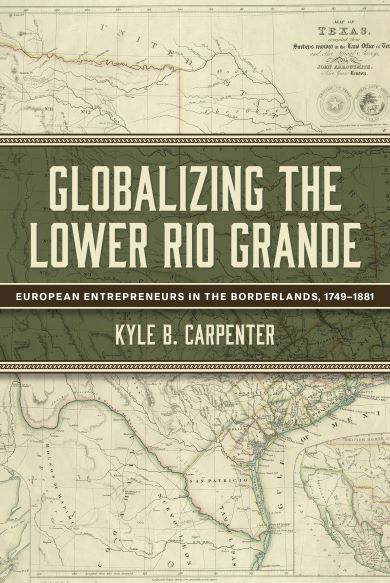
Vol. 2: Globalizing the Lower Rio Grande: European Entrepreneurs in the Borderlands, 1749–1881
Published: September, 2024 Pages: 272 Features: 3 b&w illus. 8 maps. Notes. Bib. Index.
Often obscured in the history of the nineteenth-century US-Mexico borderlands, European-born entrepreneurs played a definitive role in pushing the Lower Rio Grande borderlands into Atlantic markets. Though they were often stymied by mismanagement, notions of ethnic and cultural superiority, and eruptions of violence, these entrepreneurs persistently attempted to remake the region into a modern commercial utopia. more... about Globalizing the Lower Rio Grande: European Entrepreneurs in the Borderlands, 1749–1881
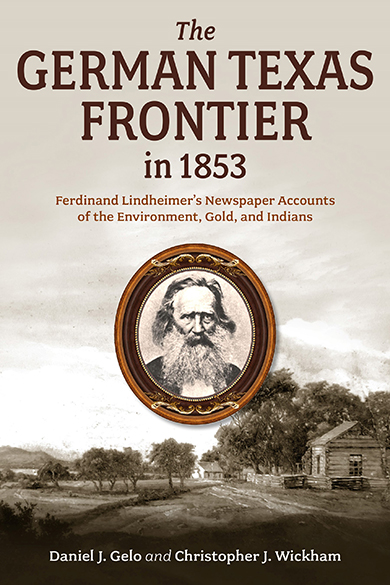
Vol. 1: The German Texas Frontier in 1853: Ferdinand Lindheimer's Newspaper Accounts of the Environment, Gold, and Indians
Published: March, 2024 Pages: 256 Features: 20 b&w illus. 5 maps. Notes. Bib. Index.
Ferdinand Lindheimer was already renowned as the father of Texas botany when, in late 1852, he became the founding editor of the Neu-Braunfelser Zeitung, a German-language weekly newspaper for the German settler community on the Central Texas frontier. His first year of publication was a pivotal time for the settlers and the American Indians whose territories they occupied. Based on an analysis of the paper’s first year—and drawing on methods from documentary and narrative history, ethnohistory, and literary analysis—Daniel J. Gelo and Christopher J. Wickham deliver a new chronicle of the frontier in 1853. more... about The German Texas Frontier in 1853: Ferdinand Lindheimer's Newspaper Accounts of the Environment, Gold, and Indians
