VOL. 18: War and the Southwest Series
February, 2027
Published
320
Pages
33 b&w illus. 2 maps. Notes. Bib. Index.
Features
About Davis's Lone Star Horyos
“I joined the Army to see the world and ride a horse. In a Japanese prison camp, I ate the horse.”—Hattie Brantley, a Texan, US Army nurse and “Angel of Bataan” captured on Corregidor.
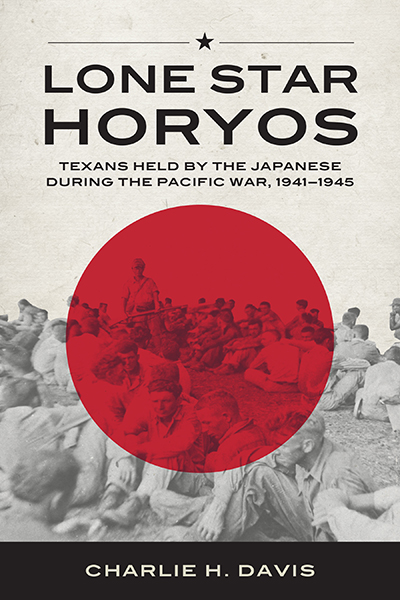
Hours after the strike on Pearl Harbor on December 7, 1941, the Japanese unleashed a massive, coordinated attack throughout the Pacific. Soon thousands of Americans found themselves surrounded by Japanese forces. Their sweeping success left the Japanese military guarding nearly thirty thousand prisoners of war, known in Japanese as horyos. These members of the US military included more than two thousand men and women from the Lone Star State.
Lone Star Horyos provides a comprehensive account of the collective experiences of these Texan prisoners of war while illuminating the broader tragedy of American captivity in the Pacific War. From embassy guards in China and Marines on Wake Island to sailors in Java and bomber crews downed over the Japanese mainland, Texans lived through the full, harrowing spectrum of the POW ordeal.
These varied stories bring to the forefront people like Calvin Permenter, a member of the famous China Marines who swallowed his pride to endure humiliating slaps from Japanese guards. Or Louis Reed, who dodged bullets to fill his canteen during the Bataan Death March, and Jack Schwartz, who found himself in the bowels of a doomed Japanese transport being hunted by the US Navy. Marvin Robinson arrived under Japanese custody covered in oil, sunburned, and without shoes after abandoning the crippled USS Houston. The Japanese labeled Fiske Hanley, a captured crewman from a B-29, a “special prisoner,” placing him in isolation and threatening to try him as a war criminal. Texans struggled to construct the Death Railway in Thailand and complete the Mt. Fuji Project in China. These prisoners endured the inhuman conditions and dangers of hell ships, forced labor in coal mines, and dangerous industrial work supporting Japan’s war machine.
Despite experiencing the full spectrum of Japanese captivity, however, Texans survived at a higher rate than those from other populous states like California, New York, or Illinois. This work draws on memoirs, oral histories, government studies, and wartime prisoner-of-war data files to explore the physical, mental, and environmental factors that contributed to survival in the most notorious POW camps of World War II. Lone Star Horyos recounts the tragedy of defeat and the triumph of endurance while shedding new light on why some survived and others did not.
About the Author
CHARLIE H. DAVIS teaches history at Lamar State College–Orange. His research focuses on Texans in the Second World War, particularly those captured by Japanese forces in the Pacific. While attending graduate school at Lamar University, he was encouraged by historian Dr. Ralph Wooster to explore this understudied subject. Lone Star Horyos is the culmination of that research. Mr. Davis lives in Lumberton, Texas, with his wife, Rachael, and their two children.
War and the Southwest Series: Recent Titles


See all titles in our Series: War and the Southwest Series
Buy Now
Lone Star Horyos: Texans Held by the Japanese During the Pacific War, 1941–1945
320 pp. 33 b&w illus. 2 maps. Notes. Bib. Index.
